This is the story of a woman who followed the flowers, and in doing so, helped preserve a treasured Hawaiian art form for future generations.
Meet Elvrine Chow – Kauai’s Beloved Lei Artisan
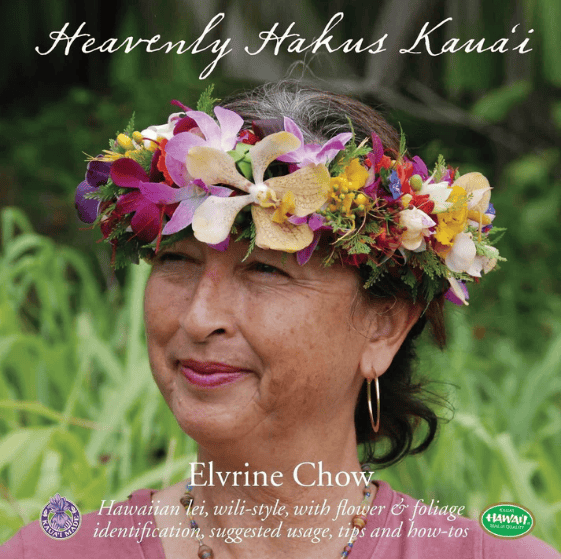
Elvrine Chow is the heart and hands behind Heavenly Hakus, a beloved lei-making business based on Kauai. Elvrine has spent decades preserving and sharing the Hawaiian tradition of lei making. Her work has been featured in publications like City Style and Living and showcased in her book Heavenly Hakus Kaua‘i, both of which highlight her artistry, teaching, and deep connection to Kauai’s native flora.
The Meaning of a Lei: A Gift, a Gesture, a Legacy
The lei, a garland or wreath of flowers, leaves, shells, seeds, feathers, or even bones, is far more than a decorative accessory in Hawaiian culture, it is a profound symbol of aloha (love, compassion), connection, and respect. With origins tracing back centuries, the practice of lei making (haku lei or lei po‘o for head lei, lei ‘ā‘ī for those worn around the neck) holds deep cultural, spiritual, and historical meaning. To understand the significance of lei is to begin to understand the values that shape Hawaiian identity and worldview
Ann Offering of Aloha
In Hawaiian culture, a lei is not merely given, it is hana no‘eau, a work of skilled artistry and intention. Each lei represents a gift of the heart. The act of giving and receiving a lei is a shared moment of connection, often accompanied by a honi (a traditional greeting involving touching foreheads and sharing breath) or a warm embrace.
A lei can commemorate any occasion, births, weddings, graduations, welcoming visitors, bidding farewell, or honoring the deceased. But it is not just the event that is important—it is the spirit in which the lei is created and offered. Every element used in a lei carries meaning: the fragrant pīkake (jasmine) may speak of love, the sturdy maile vine of respect, the vibrant lehua blossom of resilience and ancestral memory.
The Haku Style Explained
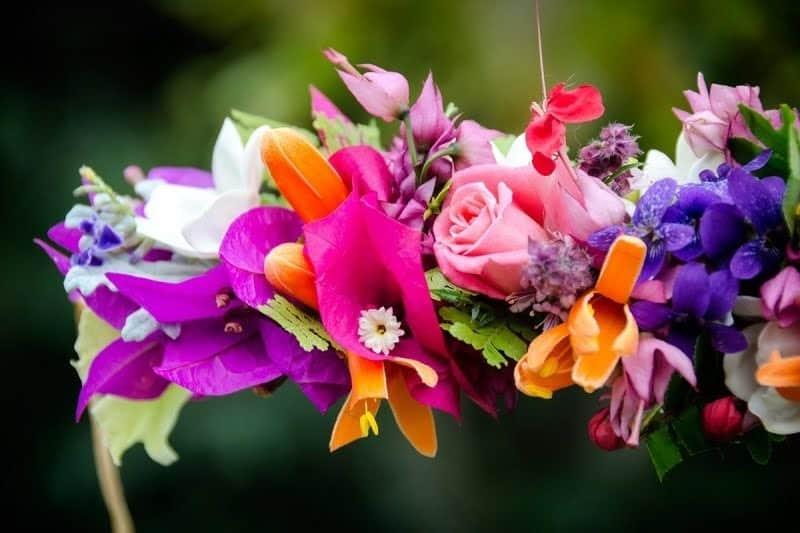
Lei poʻo, or head lei, are often worn like flower crowns, but they aren’t the same thing as haku. Over time, many people have used the two terms interchangeably. In truth, haku refers to the act of braiding or weaving, a style of lei making, while lei poʻo simply describes a head lei, which can be created in a haku style or in a wili style. Elvrine makes her lei poʻo using the wili method, wrapping or winding fresh flowers and foliage onto a coconut-leaf base with yarn and raffia. This time-honored approach is rooted in hula traditions and ceremonial practices, with certain plants holding deep cultural significance. Her lei poʻo is also versatile, often adapted to be worn around the neck as a choker-style lei.
From Backyard Blooms to Botanical Stages: Elvrine’s Craft Evolution
Heavenly Hakus began in 1996 when Elvrine started taking custom lei orders from friends and locals. Initially, she made all kinds of lei, but sourcing seasonal flowers as a small business proved difficult. She soon focused on ti leaf lei and haku, honing her skills and building a strong reputation.
While working at K.I.D.S. Preschool in Kapaʻa, she developed a convenient relationship with the flower shop Flowers & Joys just down the street. After work, she’d swing by the shop, pick up flowers for their haku orders, and spend her evenings crafting lei, delivering them the next morning before preschool began. This flexible arrangement allowed her to experiment with a variety of flowers and refine her technique for custom orders.
A Community-Based Practice
Elvrine’s practice is deeply tied to the local community. Her work with flower shops, clients, and markets allowed her to offer personalized creations while staying grounded in local flora. She joined programs like Kauaʻi Made, which opened the door for lei demonstrations and teaching opportunities that further expanded her impact.
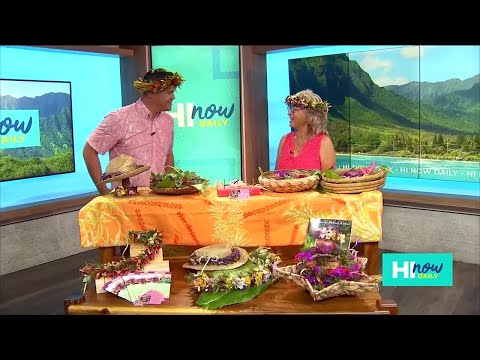
In 2014, Elvrine was invited by the Hawaii Visitors Convention Bureau to demonstrate lei making at the Orchid Show hosted by the Chicago Botanical Gardens. She has also been featured on Hawaii News Now and her work has been featured in publications like City Style and Living recently featured on Hawaii News Now.
Teaching the Next Generation: A Living Cultural Legacy
Elvrine is as much a teacher as she is an artist. She leads lei-making workshops at Common Ground Kauai, the Kauaʻi Museum, and the National Tropical Botanical Garden in Lāwaʻi, as well as private sessions for both locals and visitors. These are more than crafting classes, they’re immersive cultural experiences that blend storytelling, history, and respect for the land.
Created with photographer Ada Koene, Elvrine recently published a book on the art of lei making. Heavenly Hakus Kauai documents Elvrineʻs techniques and celebrates the people who wear her hakus. Every model featured is either a family member, friend, or customer who joyfully posed at one of her markets. The book includes detailed flower and foliage identification, step-by-step guidance, and a rich cultural context, serving as a heartfelt guide to Hawaiian wili-style lei making.

Where to Find Elvrine and Heavenly Hakus
- Kauaʻi Community College Farmer’s Market – Every Saturday
- Instagram: @kauaiflowercrowns
- Email: kauaiflowercrowns@gmail.com
- Phone: 808-634-9999