
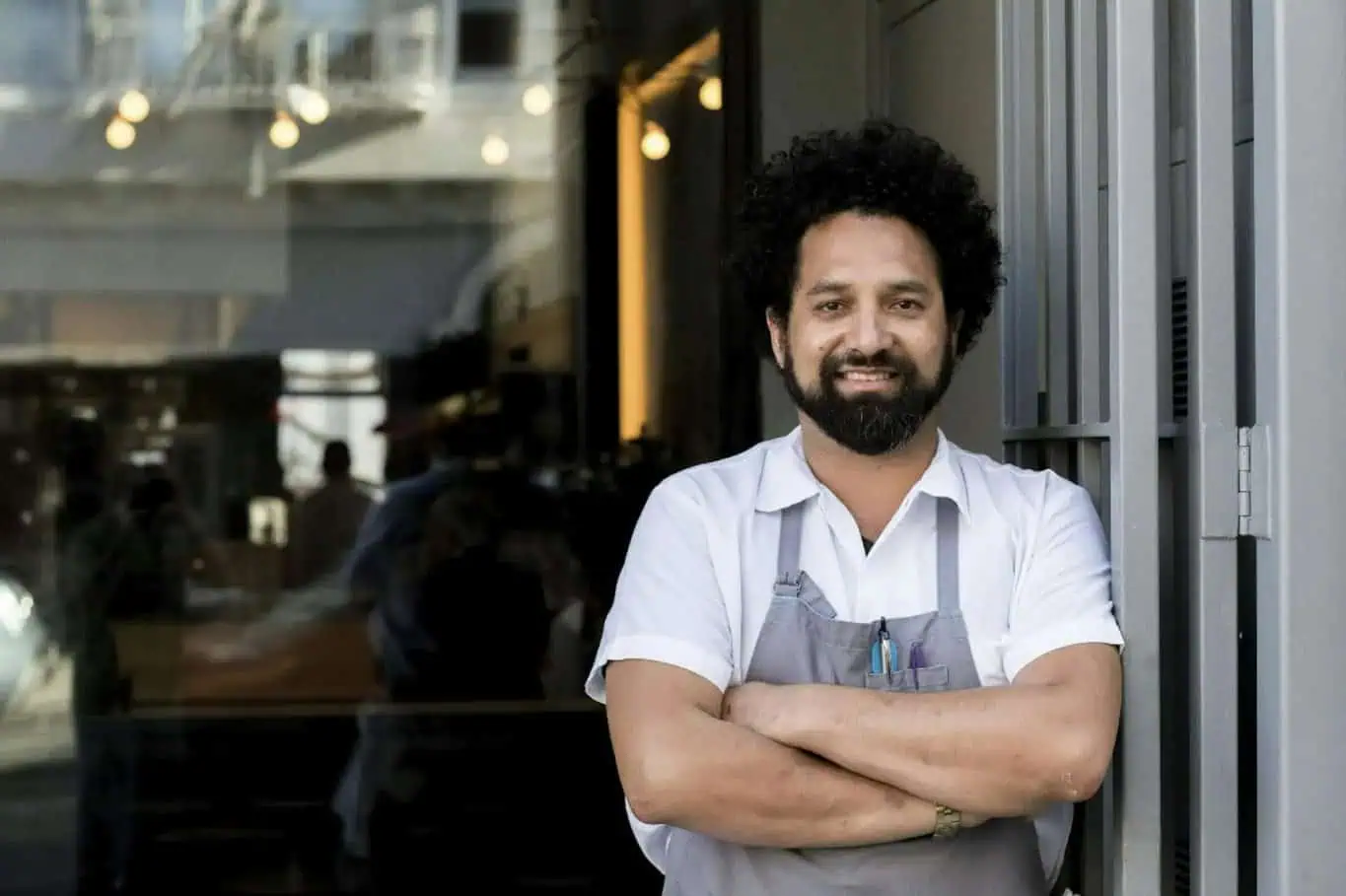
“It all has to go deeper than plaques on the wall that say we care about respect!”
Born and raised on Oʻahu by a Native Hawaiian-Chinese mother and father from India, Ravi Kapur is now known as one of San Francisco’s favorite chefs. He is a changemaker on many levels: by committing to truly equitable pay among his restaurant staff (nearly unheard of in the industry), prioritizing the mental health of his employees—to the point of opening his restaurant for four hours, five nights a week—and developing his menus collaboratively.
Growing up, Ravi’s kitchen pantry reflected the cultural tapestry which makes up the food landscape of Hawaiʻi. It was not just the ingredients of Hawaiian fare but also the concept that food is a unifying tie and brings people together that were intrinsic parts of his life from the onset. “I don’t think I realized how much it influenced my cooking until later in life,” he says. He went to culinary school on the mainland and was shocked. “The flavors, the techniques, the ingredients, none of it was what I’d grown up with,” Ravi says. He was being taught Euro-centric cooking methods as the standard. It took a while for him to feel legitimate in his personal cooking style. But “legit” was perhaps how a great many San Franciscans described the popular series of pop-ups, also known as Liholiho Yacht Club, which Ravi began in 2012 and which later became a brick-and-mortar restaurant by the same name. (A name which, by the way, originates with Ravi’s “uncles” on Maui, who formed a club in the 1970s that would host beach gatherings with good local food and music to fund their passion: racing Hobie Cats. They called this club the Liholiho Yacht Club.)
In January 2022, Ravi and his partner Jeff Hanak introduced their latest project. It is in some ways the result of a global pandemic. Having a year to self-reflect and reexamine core values led to Ravi, his partner, and his leadership team opening the Good Good Culture Club under an equitable compensation model. The radical ideas of providing staff with living wages, mental health benefits, and the encouragement to further their education are part of the foundation of the Good Good. The restaurant itself is filled with natural light, neon pink details, and lots of greenery. It is, in so many ways, a bright place. And just like when Ravi’s Liholiho Yacht Club opened its doors, when the Good Good opened, he was faced with the same question: “What kind of food is it?” He says he struggles to answer this now just as he did then. “It’s a way for people to connect themselves to the food. What they’re really asking is, ‘Is it Italian?’” laughs Ravi. It’s not enough to call the Good Good Asian cuisine, just like it definitely wasn’t enough to call the Liholiho Yacht Club Hawaiian food.
For Ravi, it’s about the mingling, exchanging, and acknowledgment of our individual and collective pasts and our memories of food. He encourages his staff to freely, creatively bring ideas to the table and to be open to feedback. In this way, they find common ground. And because people are often more comfortable when things are labeled, this concept has been deemed “heritage-driven cooking.” Ravi is okay with the term.
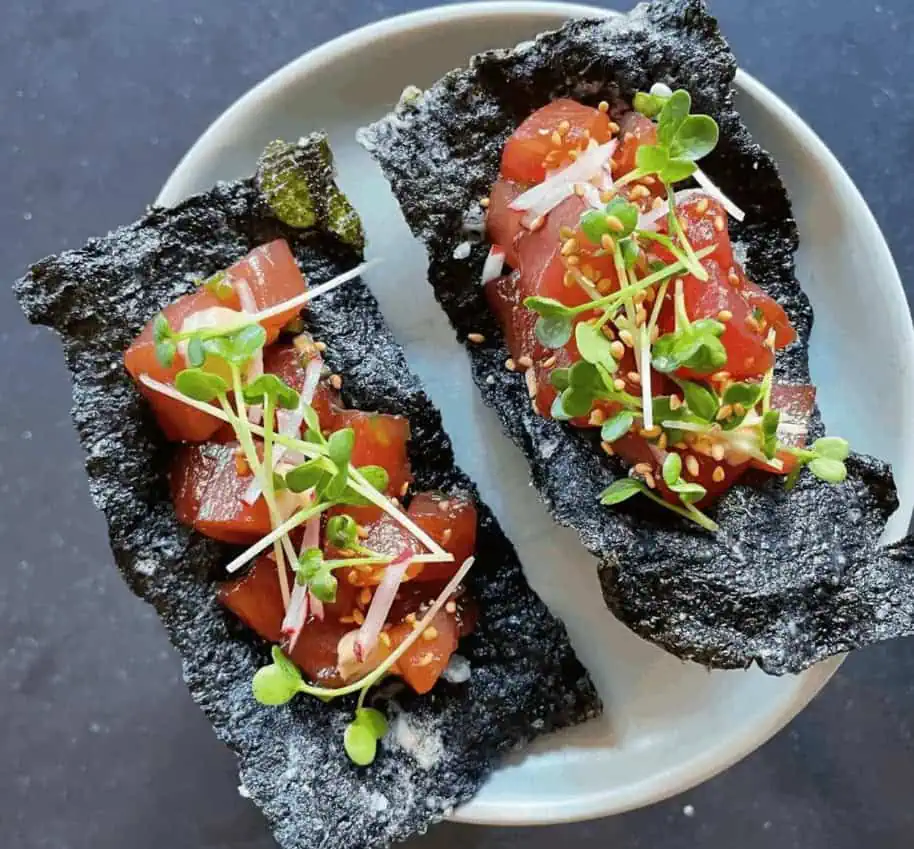
“We’re exploring the idea of identity and cooking from the places we came from. I embrace our team asking those questions for themselves.”
Ravi explains that when collaborating on a new dish, the team considers: What are we trying to communicate right now? A guest will first see the dish with their eyes, so it needs to get their attention in some way. “But then you eat it, and I want to give someone something they’ve never had before, but then it reminds them of something in a unique way. That’s our collective heritage.”
Ravi is proving that food is “the great connector” in more ways than one. He has brought to life a venture that connects his roots—and his staff’s roots—to the roots of those who eat and drink at his establishments. When entwined, the bind is strong. “We’re celebrating the idea that we have more in common than what separates us,” Ravi says.